
How to Bring Wilding Into a Modern Garden

When people hear the word wilding, they often picture sprawling cottage gardens, tangled meadows and countryside landscapes. But wildlife-friendly gardening can work beautifully in modern spaces too.
In fact, contemporary gardens are often the perfect backdrop for a softer, more natural approach. The secret lies in balancing structure with looseness — keeping the clean lines of modern design while allowing nature room to breathe.
The month of May has popularised the term “No Mow May”, encouraging gardeners to put away the mower and allow nature space to thrive — but in our opinion, supporting wildlife in our gardens should not be limited to just one month of the year.
Think “Controlled Wildness”
Modern gardens thrive on simplicity: strong shapes, restrained materials and uncluttered spaces. Wilding in this context is less about abandoning design and more about softening it.
Instead of mowing every inch of lawn, allow carefully chosen areas to grow longer. Keep pathways crisp and borders defined so the wilder elements feel intentional rather than neglected.
A neat edge can make even the loosest planting scheme feel curated.
Use Layers of Grasses
Ornamental grasses are one of the easiest ways to introduce movement and natural texture into a contemporary garden.
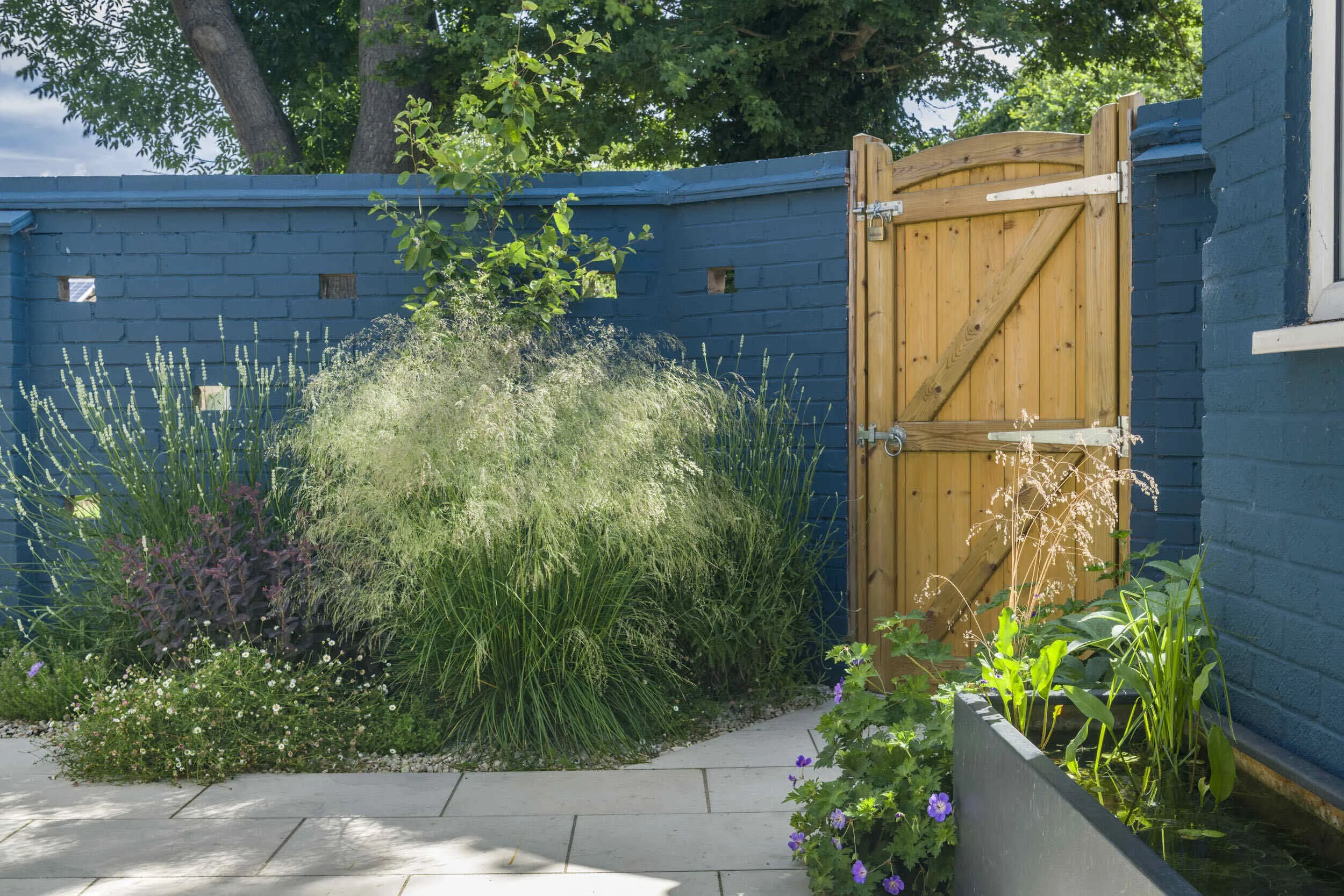
Tall grasses such as feather reed grass, miscanthus or stipa create softness against concrete, corten steel, stone and rendered walls. Mixing varying heights gives the space a meadow-like feel while still looking architectural.
The movement is part of the appeal — grasses catch the wind, shift with the light and bring a sense of calm to structured spaces.
Create a Minimalist Nature Pond
A wildlife pond can feel surprisingly sleek in a modern setting.
Think simple geometric shapes rather than ornate water features. A rectangular reflecting pond or circular sunken basin planted with marginal plants can attract birds, bees, frogs and dragonflies while complementing a contemporary aesthetic.
Avoid overly decorative edging and let the planting provide the softness.
Even a small water feature dramatically increases biodiversity.
Plant in Drifts Rather Than Dots
One hallmark of modern planting design is repetition.
Rather than filling borders with lots of individual species, choose a smaller palette of plants and repeat them in groups or “drifts”. This creates a calm, cohesive look while still supporting pollinators.
Purple verbena floating above grasses, blocks of salvia, echinacea or alliums, and swathes of native wildflowers can all look incredibly contemporary when planted boldly.
Embrace Seasonal Texture
Modern wilding is not about constant perfection.
Leave seed heads standing through autumn and winter. Frost-covered grasses and sculptural dried flower heads add beauty, movement and habitat long after summer ends.
What once might have been seen as “untidy” becomes part of the design itself.
Choose Natural Materials
Wildlife-friendly gardens pair beautifully with materials that age naturally.
Weathered timber, gravel paths, corten steel planters, reclaimed stone and untreated oak all help blur the line between designed space and natural environment.
The result feels grounded, calm and connected to the landscape around it.
A Garden That Feels Alive
Modern wilding is ultimately about creating gardens that are both elegant and ecologically rich.
A sharply cut path through long grasses. A minimalist pond alive with dragonflies. Pollinator-friendly planting against clean architectural lines.
The beauty comes from contrast — structure alongside softness, design alongside biodiversity.
Wildness does not have to mean chaos. Sometimes it simply means making room for life.
For more inspiration, take a look at our completed Wildlife Haven project in Cambridge — a garden designed to balance contemporary landscaping with spaces that encourage biodiversity and natural habitats.
